Stay connected with Isabel

Receive gentle updates and insights from us.
Thank you! Your submission has been received!
Oops! Something went wrong while submitting the form.

What Is EMDR Therapy and How Does It Help?

EMDR
Written By
Isabel Feibert

If you’ve heard of EMDR therapy but aren’t quite sure what it is or how it works, you’re not alone. Many people come across EMDR when they are seeking help for trauma, anxiety, or experiences that feel “stuck” in their nervous system, even after years of other types of talk therapy.

EMDR stands for Eye Movement Desensitization and Reprocessing. It is an evidence-based psychotherapy approach that helps the brain process and integrate \unresolved emotional experiences, whether or not there is a clear or specific memory attached. For many people, distress shows up as long-standing patterns such as feeling unsafe, unworthy, on edge, or emotionally disconnected, rather than as a single event they can point to. EMDR works with the beliefs, emotions, and body sensations linked to these experiences, allowing them to shift and soften over time.

How EMDR Works

At its core, EMDR is based on the understanding that our brains are naturally wired to heal. When something overwhelming or traumatic happens, the brain sometimes cannot fully process the experience. Instead of being stored as a past event, the memory remains “unprocessed,” along with the emotions, body sensations, and beliefs that were present at the time.

When this happens, reminders in the present can trigger the nervous system as if the event is still happening now.

During EMDR therapy, you are guided to briefly focus on a memory or experience while also engaging in bilateral stimulation. This typically involves side-to-side eye movements, tapping, or auditory tones. This bilateral stimulation helps activate both sides of the brain, supporting the brain’s natural ability to reprocess the memory.

Over time, the memory becomes less emotionally charged, feels more distant, and is integrated in a way that allows you to respond from the present rather than react from the past.

What EMDR Can Help With

EMDR was originally developed to treat post-traumatic stress, and extensive research supports its effectiveness. Today, it is used to address a wide range of concerns, including:

  • Trauma and PTSD (single incidents or complex, ongoing trauma)

  • Anxiety and panic

  • Depression

  • Childhood wounds and attachment injuries

  • Disturbing memories or intrusive thoughts

  • Negative core beliefs such as “I’m not safe,” “I’m not good enough,” or “Something is wrong with me”

  • Performance anxiety, phobias, and chronic stress

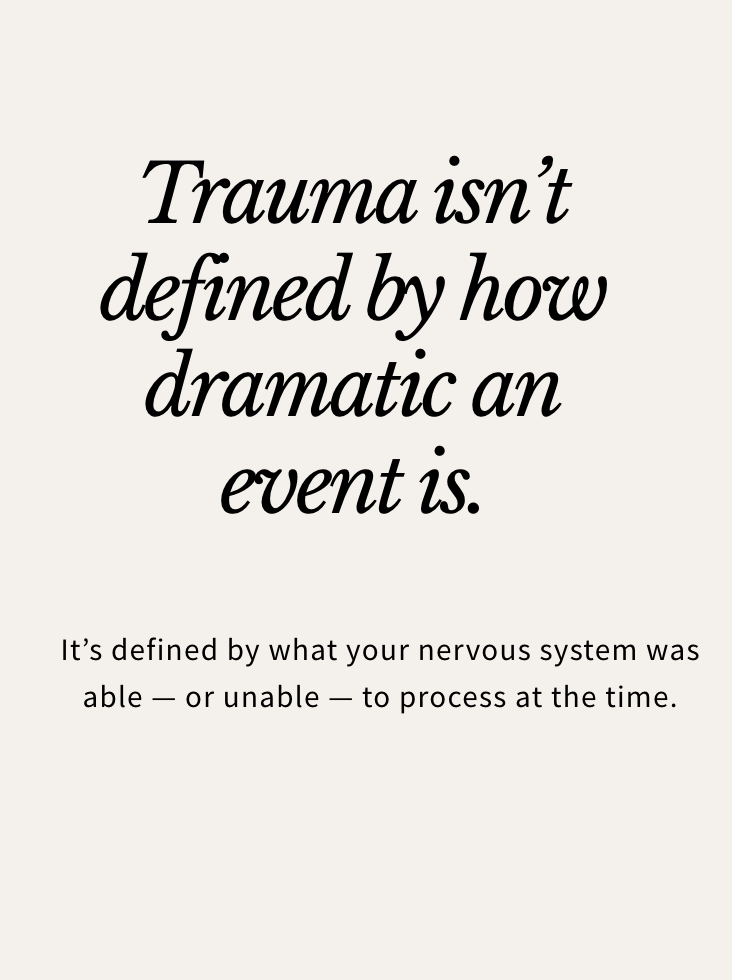
You do not need to have a single, clearly defined traumatic event for EMDR to be helpful. Many people seek EMDR for experiences that were emotionally overwhelming or invalidating, even if they do not label them as “trauma.”

Curious how evidence-informed care could support your recovery?

Explore personalized chiropractic and manual therapy at Alera, where care is guided by understanding, not assumptions.

Close-up of a woman in a green dress holding a purple amethyst crystal cluster with both hands.

Recently published

Relationships

Why Do I Keep Doing This in Relationships? A Deep Dive Into Attachment Styles and Why They Matter

The patterns that confuse you most often make perfect sense once you understand where they started.

April 11, 2026
Isabel Feibert
April 12, 2026
EMDR

When the Past Still Feels Present: How EMDR Therapy Helps

Some experiences do not fade on their own. EMDR helps your brain finally finish processing them.

April 11, 2026
Isabel Feibert
April 12, 2026
Relationships

Why Your Brain Keeps Leading You Back to Toxic Relationships - And Why It's Not Your Fault

The neuroscience behind one of the most painful and misunderstood patterns in human experience

April 11, 2026
Isabel Feibert
March 6, 2026

Stay connected
with Isabel

Receive gentle updates and insights from us.
Thank you! Your submission has been received!
Oops! Something went wrong while submitting the form.

Follow us @therapywithisabel_

Illustration of a human brain above the text 'Why your brain keeps leading you back to toxic relationships... and why it might not be your fault' on a beige background.
Person sitting with a laptop on their lap, wearing a white tank top and white pants, with a necklace and tattoos visible, with overlaid text about internal dialogue and shame.
Ocean water with text saying, 'Most of the beliefs you carry about yourself didn’t start with you. So where did they come from?'
Text stating trauma isn't defined by how dramatic an event is, but by what the nervous system was able or unable to process at the time.
Ocean water with text saying, 'Most of the beliefs you carry about yourself didn’t start with you. So where did they come from?'
Illustration of a human brain above the text 'Why your brain keeps leading you back to toxic relationships... and why it might not be your fault' on a beige background.
Text stating trauma isn't defined by how dramatic an event is, but by what the nervous system was able or unable to process at the time.
Person sitting with a laptop on their lap, wearing a white tank top and white pants, with a necklace and tattoos visible, with overlaid text about internal dialogue and shame.
Illustration of a human brain above the text 'Why your brain keeps leading you back to toxic relationships... and why it might not be your fault' on a beige background.
Text stating trauma isn't defined by how dramatic an event is, but by what the nervous system was able or unable to process at the time.
Ocean water with text saying, 'Most of the beliefs you carry about yourself didn’t start with you. So where did they come from?'