.png)
When the Past Still Feels Present: How EMDR Therapy Helps
Some experiences do not fade on their own. EMDR helps your brain finally finish processing them.

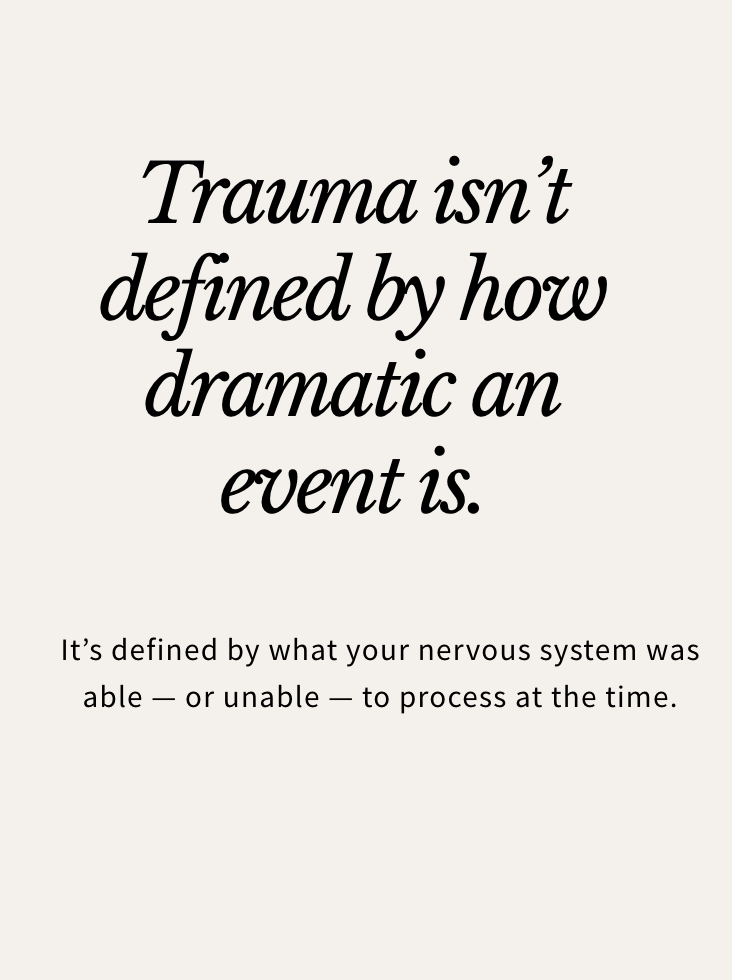
You may know, logically, that the past is over.
You may understand where your reactions come from.
And still, your body responds as if the danger is happening now.
This can be confusing and frustrating. Many people come to therapy wondering why insight, reassurance, or years of talking haven’t changed these automatic responses. The answer is not that you are doing therapy wrong. It is that the part of the brain holding these memories has not yet had the chance to update them.
This is where EMDR can help.
Why the Past Can Still Feel So Real
When something overwhelming happens, especially when we feel powerless or unsafe, the brain stores that experience differently than ordinary memories. Instead of being filed away as something that happened and ended, it can remain connected to the nervous system as a present threat.
This is why a smell, tone of voice, or body sensation can suddenly trigger fear, shame, or panic. The brain is not choosing this response. It is responding based on how the memory was stored at the time.
Understanding this can be deeply relieving. Your reactions are not a failure of willpower or insight. They are a nervous system doing its best to protect you based on old information.
How EMDR Works With Memory Reconsolidation
EMDR uses a process called memory reconsolidation, which is how the brain updates emotional memories when they are activated in the present.
When a memory is gently brought into awareness, the brain briefly opens a window where that memory can change before it is stored again. EMDR intentionally supports this process by activating the memory while your nervous system is also anchored in the safety of the present moment.
With the support of bilateral stimulation, such as eye movements, taps, or tones, the brain is able to take in new information. This might include the awareness that you survived, that you have choice now, or that the danger has passed.
You do not have to force these realizations. They emerge naturally as the brain integrates the experience in a new way.
Why EMDR Is Different From Talking Alone
Talking about an experience can help you understand it. EMDR helps your nervous system feel that it is over.
Many people say things like:
- “I know it wasn’t my fault, but it still feels like it was.”
- “I understand it logically, but my body doesn’t agree.”
- “I’ve talked about it so much, but nothing has changed.”
Traumatic memories are often stored with strong emotional and bodily components, not just as stories. EMDR works with thoughts, emotions, and sensations together, allowing the brain to update the memory at the level where it was originally learned.
What Changes When a Memory Updates
As memories reconsolidate, clients often notice shifts such as:
- Emotional reactions becoming less intense or disappearing
- Body symptoms like tension, panic, or shutdown easing
- The memory feeling more distant or neutral
- Old beliefs losing their emotional grip
- A greater sense of calm or self-trust in situations that once felt overwhelming
The memory does not disappear. What changes is how your body and nervous system respond to it.
Curious how therapy in Miami, FL can support you?
Book a free consultation to learn more.
.jpg)



.png)